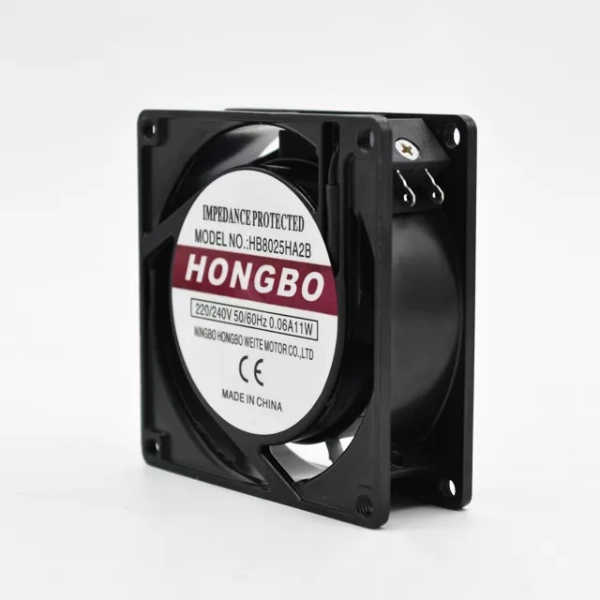
In industrial thermal management, choosing the wrong cooling fan is more than a minor inconvenience—it’s a risk to your equipment’s lifespan. Whether you are cooling an electrical cabinet, a server rack, or a manufacturing line, selecting the right AC Axial Fan requires a balance of airflow physics, mechanical compatibility, and electrical specs.
This guide breaks down the four critical factors you must consider to ensure optimal cooling and long-term reliability.
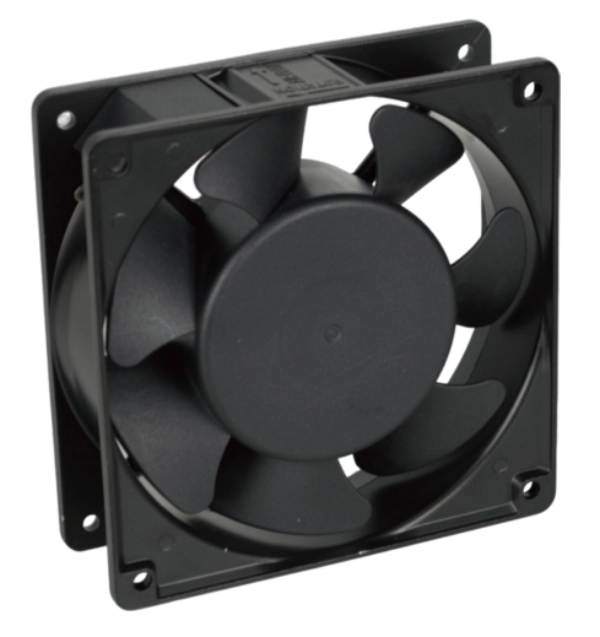
Airflow vs. Static Pressure: The “Volume vs. Power” Debate
The most common mistake is choosing a fan based solely on CFM (Cubic Feet per Minute). To select the right fan, you must understand the environment it will operate in.
Airflow (CFM/CMH): This represents the volume of air moved. It is the priority for “Open Air” applications where there is zero resistance—such as simple room ventilation.
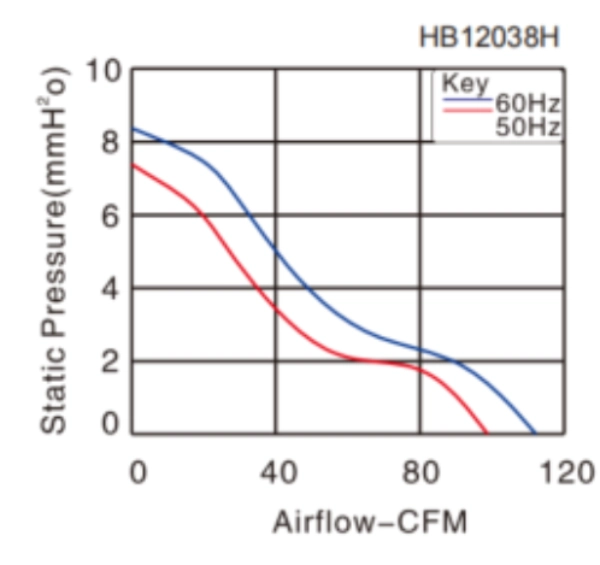
Static Pressure: This is the “pushing force” needed to overcome resistance. If your fan is blowing through a dust filter, a dense heat sink, or a cramped enclosure, you need high static pressure.
Pro Tip: Always check the P-Q Curve (Performance Curve). A fan might have high CFM on paper, but if its static pressure is low, the airflow will drop to near zero once installed behind a mesh filter.
Choosing the Right Size and Mounting
Physical dimensions are usually dictated by your existing housing. However, the depth of the fan is often overlooked.
Common Diameters: 80mm to 92mm: Ideal for compact power supplies and small medical devices.
120mm (4.7 inches): The industry standard for computer cases, server racks, and telecommunications.
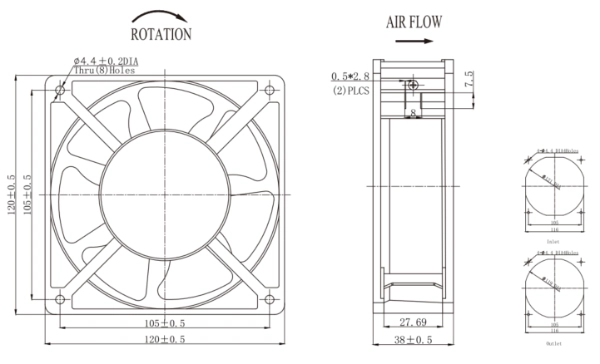
172mm to 254mm+: Used for heavy-duty industrial machinery and large cabinet cooling.
Thickness Matters: A 120x120x38mm fan will almost always provide higher static pressure than a 120x120x25mm fan because the deeper blades can “scoop” and compress more air.
Bearing Systems: Reliability and Orientation
The bearing determines how long the fan will last (L10 Life Expectancy) and how it can be mounted.
| Feature | Sleeve Bearing | Ball Bearing |
| Lifespan | ~30,000 Hours | ~70,000+ Hours |
| Mounting | Horizontal Only | Any Angle (Vertical/Horizontal) |
| Environment | Clean, low-temperature offices | Industrial, high-heat, 24/7 use |
| Cost | Budget-friendly | Premium / Professional |
If your fan is mounted on a ceiling or a door that tilts, always choose Ball Bearings. Sleeve bearings will fail prematurely if not kept perfectly horizontal.
Electrical Specs: Voltage and Frequency
Since AC fans run directly on grid power, you must match the fan to your region’s electrical standards.
Voltage: Most industrial fans are rated for 115V (North America) or 230V (Europe/Asia). Ensure you check for “Wide Voltage” or “Dual Voltage” options if your equipment is shipped globally.
Frequency (50Hz vs. 60Hz): AC motors are frequency-dependent. A fan running at 60Hz rotates roughly 20% faster than at 50Hz.
Warning: If a fan is only rated for 50Hz but is used on a 60Hz line, it may draw more current and overheat the motor.
Noise Levels (dB) and Safety Ratings
In environments where people work (offices, labs), noise is a major factor.
Noise Rating: Look for the dB(A) rating. Every 3dB increase represents a doubling of sound intensity.
Certifications: For industrial safety and export, ensure the fan carries UL, CE, or RoHS certifications. This guarantees the plastic is flame-retardant and the motor is thermally protected.
Summary Checklist for Buyers
Before clicking “Buy,” verify these five points:
Does the Static Pressure match my internal resistance?
Is the thickness (depth) compatible with my space?
Am I mounting it vertically? (If yes, use Ball Bearings).
Does the voltage and frequency (50/60Hz) match the local grid?
Does it have the required safety certifications?
Need a Custom Cooling Solution?
Selecting the right AC axial fan can be complex. If you are looking for high-performance fans with custom lead wires, salt-fog protection, or specific IP ratings, [Link to your Product Page/Contact Us] today for a technical consultation.